


Inside Ukraine's 'unbroken' cities: Amputees, resilience and the fight to survive

Thabiso Goba
1 December 2025 | 11:00With fighting intensifying and more amputees being created as a result, the Ukrainian government is in the process of opening two additional Superhumans rehabilitation centres in other parts of the country.

A Banksy painting recovered from a bombed building in Bucha, Ukraine. It shows a ballet dancer with a neck brace/Picture:Thabiso Goba/EWN
On 30 January 2025, Eddie Scott was evacuating injured civilians in Pokrovsk, Ukraine, when a Russian missile hit the car he was travelling in.
“It blew my arm off and destroyed my leg,” Scott recounted. “I took the worst of it. My team lead took minor shrapnel, and both our evacuees took minor shrapnel.”
Scott now lives without both his left arm and leg.
He is one of about 100,000 amputees in Ukraine who were injured as a result of the country’s war with Russia.
In February 2022, Russia launched a full-scale invasion of Ukraine, claiming to “liberate” what it called Russian-controlled breakaway republics from Kyiv.
However, for more than three years, Ukraine has held off Russia’s much larger force with the assistance of local and international partners.
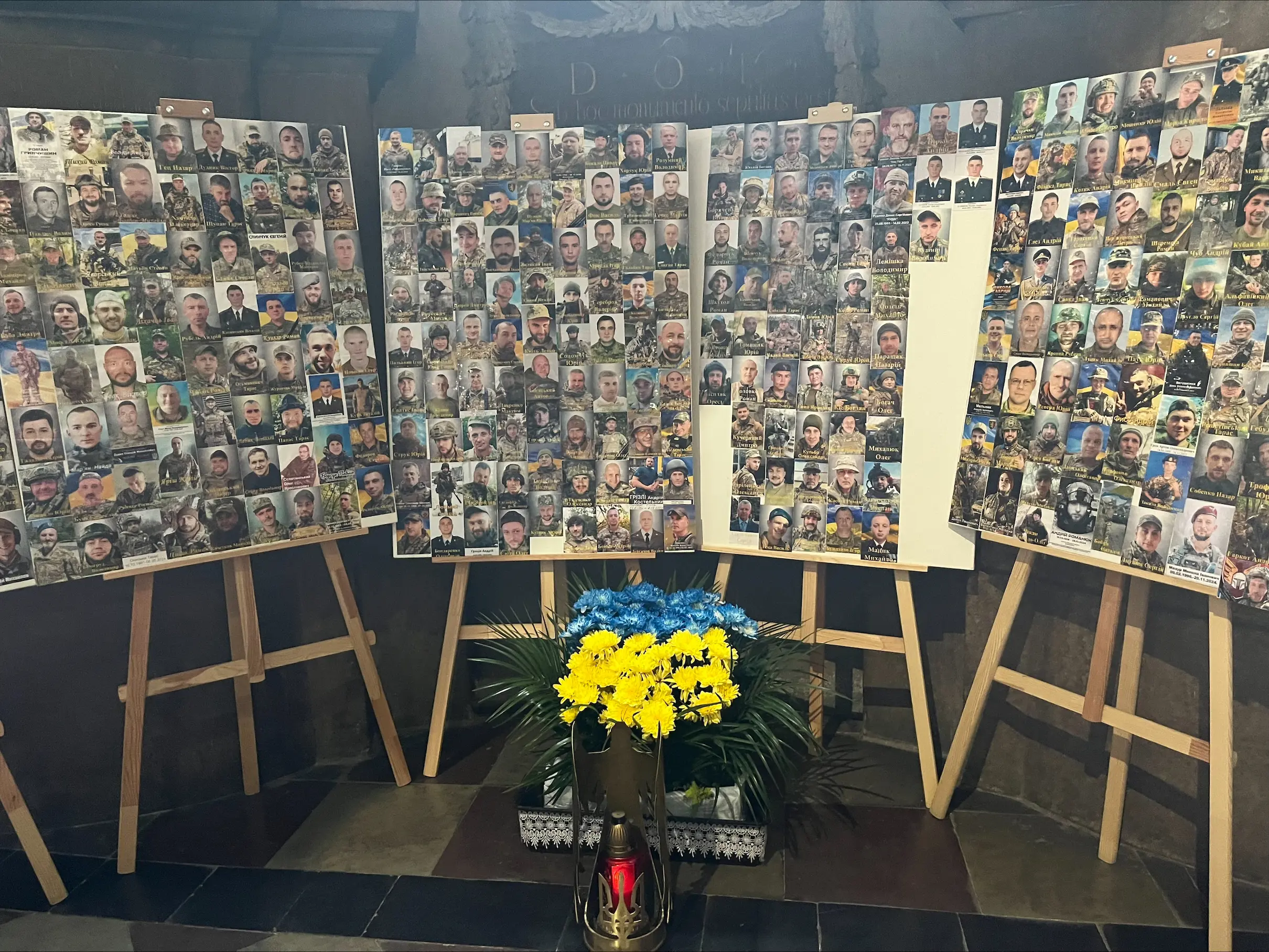
A remembrance wall of fallen soldiers in the Russia-Ukraine conflict however the deaths in this wall go back to 2014./Picture: Thabiso Goba/EWN
The Superhumans Facility
Located in the heart of Lviv is the Superhumans rehabilitation centre.
It’s a large white building, a former Soviet-era hospital, that has been renovated to treat the men and women injured on the frontlines.
Unsurprisingly, there are many amputees inside and outside the building.
The injuries vary: many have lost legs, some are in wheelchairs, and many use orthopaedic limbs. There are also patients with orthopaedic arms.
The only fully able-bodied people in the facility are staff and family members.
Scott was admitted to Superhumans shortly after the attack in Pokrovsk.
A British sailor by profession, Scott said he travelled extensively around the world, especially in the Caribbean, doing humanitarian work.
Shortly after the invasion, he joined Base UA, a Ukrainian non-governmental organisation assisting with evacuations of civilians from war-torn territories.
After losing both his leg and arm, Scott believed he might never sail at the level he once did.
Fortunately, he was offered a job as an ambassador for the Superhumans centre, where he now works with others who were injured in the conflict.
“When you come to Superhumans, you’re part of a family - it’s treatment forever,” he said.
“So if we can put people in a position where they feel like they’re part of a crew and a family, it helps with their recovery, not just while they’re here, but when they leave.”
Scott said about 95% of the people treated in the facility are military personnel, while the rest are civilians.
With fighting intensifying and more amputees being created as a result, the Ukrainian government is in the process of opening two additional Superhumans rehabilitation centres in other parts of the country.
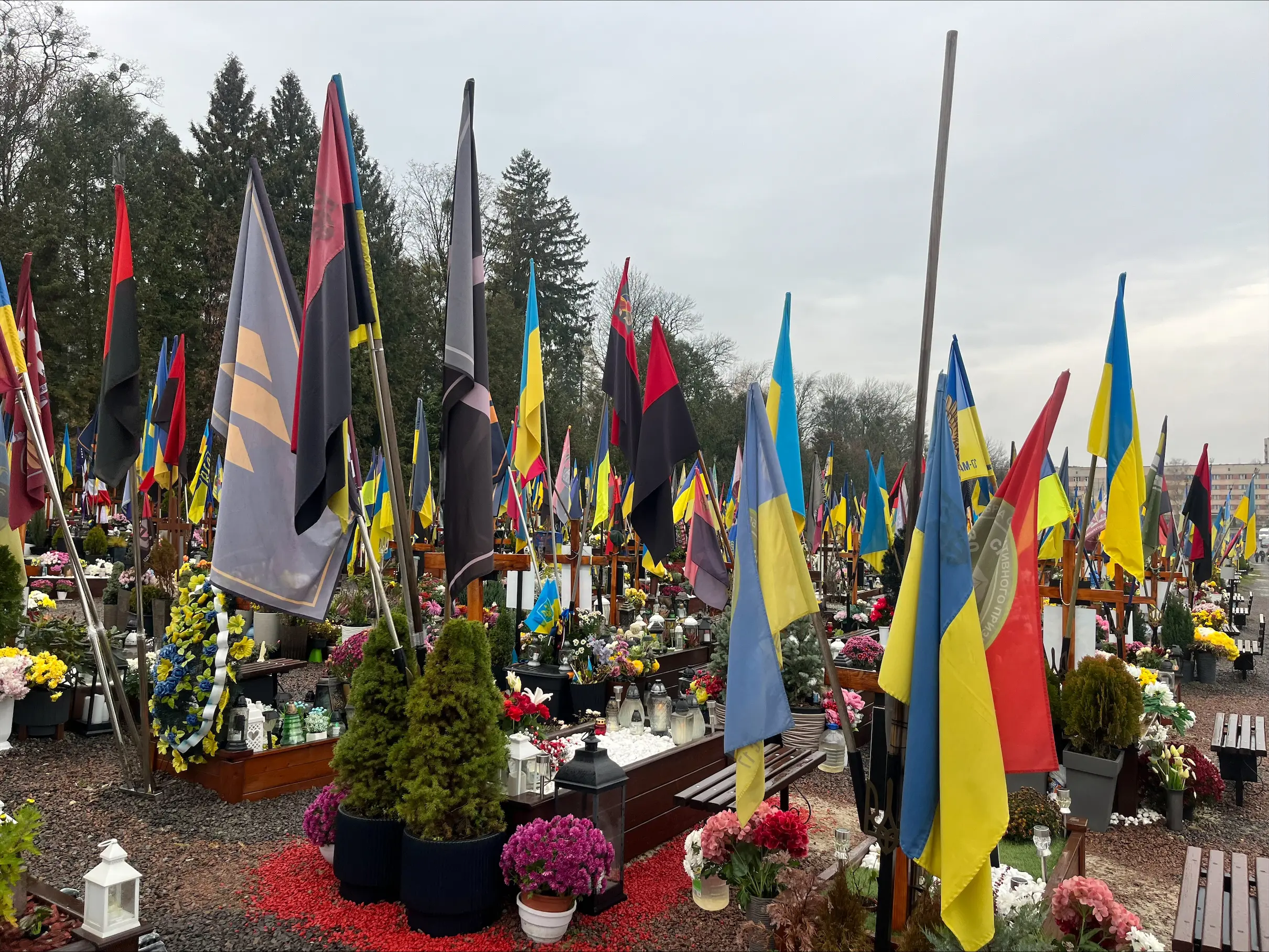
The Lychakiv Cemetery is the final resting place for many prominent Ukrainians who died in the war. Many are buried with the Ukraine flag and the flag of the soccer team they support. Picture: Thabiso Goba/EWN
The ‘Unbroken’ City
The city of Lviv is known as the cultural hub of Ukraine.
It houses some of the country’s and even the world’s oldest churches and historical monuments that reflect Ukraine’s rich and complex history.
In Lviv, life continues as normal. Adults go to work every day, parents walk their children to school, and store shelves remain fully stocked.
There are a few visible signs that this is a city in a country fighting one of the bloodiest wars in recent memory.
Due to its location, it takes about 25 minutes for a missile launched from Russia to reach Lviv.
As a result, it is one of the safest major cities in Ukraine.
When EWN visited the city, a siren rang out at night to signal Russian missiles entering Ukrainian airspace.
The underground hotel bunker - where everyone was instructed to take shelter - remained empty, as locals know missiles are unlikely to hit the city.
Many students who were studying in Kyiv and other cities closer to the Russian border have transferred to Lviv’ tertiary institutions.
Beyond hosting the Superhumans rehabilitation centre, Lviv also hosts a social housing programme for soldiers who fought in the war.
The city has a programme for mothers whose children died in the war, has built new schools to accommodate orphans, and has even introduced new sports for amputees.
Large-scale efforts are underway to make the city more accessible for people with disabilities.
Collectively, these initiatives are known as the Unbroken Rehabilitation Ecosystem in Lviv.
The man heading these efforts is Lviv Mayor Andriy Sadovyi.
“The Russian full-scale invasion presented a new reality for us. I recall the second day after the invasion, in one day we hosted one hundred people,” he said.
The ongoing conflict has forced major changes in how the city council operates.
Sadovyi said many municipal resources have been redirected toward the war effort rather than daily service delivery.
In fact, 20% of the municipality’s budget now goes toward the Ukrainian military.
“This is a war about Ukraine’s independence. We have a unique chance, and we must survive,” he said.
“We stopped investing money in construction projects and roads; all the money is reserved for buying military equipment.”
Sadovyi recently announced the municipality would be purchasing anti-drone systems costing 50 million hryvnia (R20 million).
Like most cities in Ukraine, Lviv has several monuments honouring the country’s fallen soldiers.
The Lychakiv Cemetery is the final resting place of many prominent Ukrainians who died in the war.
They include journalists, actors, singers, and other professionals who gave up their careers to fight on the frontlines.
The cemetery is colourful, nearly every grave has a Ukrainian flag and the flag of the deceased’s local football team.
Families and even fans regularly visit to pay respects, often leaving red candles or flowers.
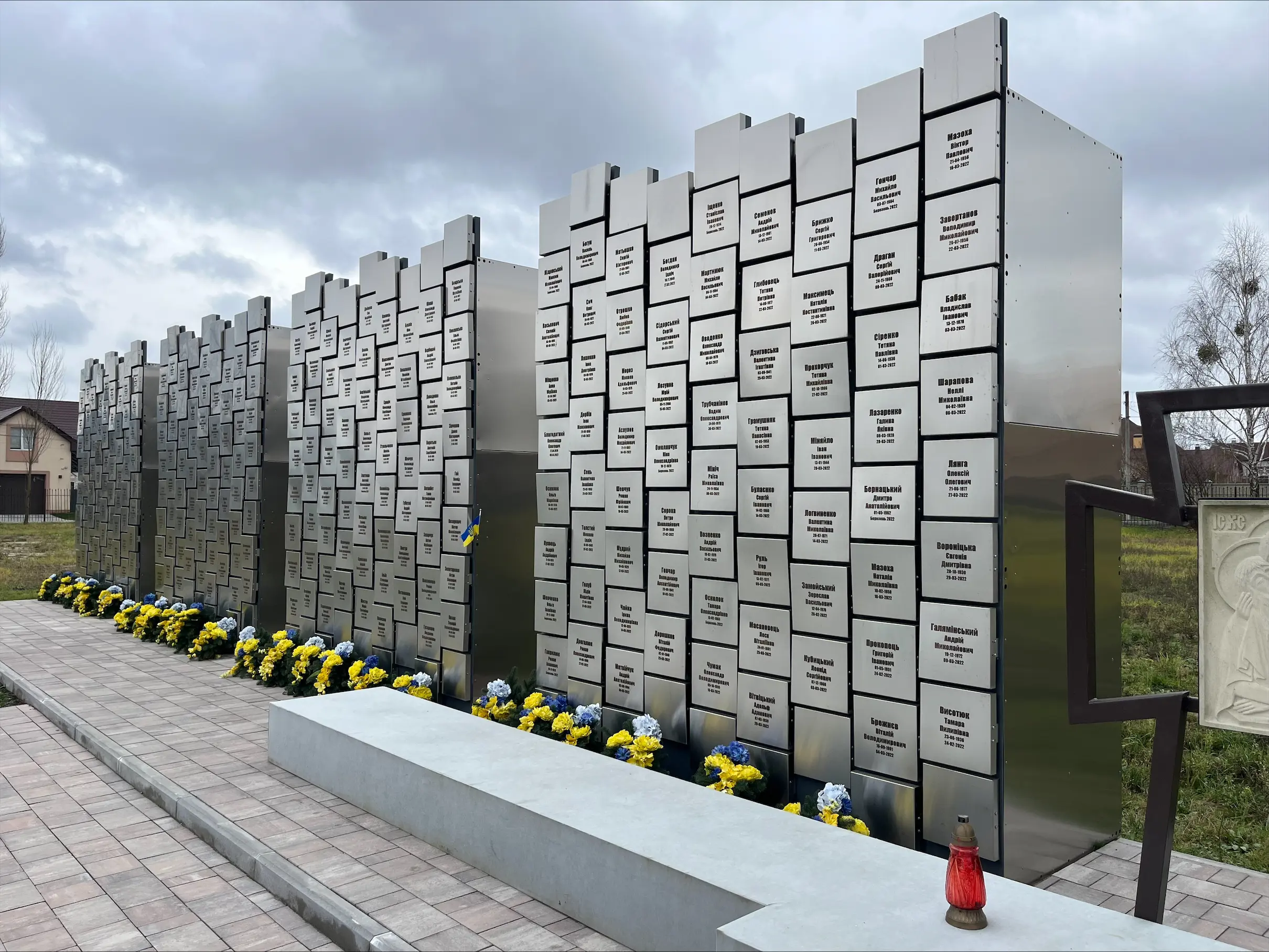
A remembrance wall in Bucha for all the people that died during Russia's two-week occupation of the town in 2022/Picture: Thabiso Goba/EWN
Russian-Controlled Territories
While the full-scale war began in 2022, for many Ukrainians, the conflict with Russia began much earlier.
This is especially true for Ukrainians who once lived in the now Russia-occupied region of Crimea.
Russia officially annexed Crimea in 2014 and has held it for more than a decade.
Refat Chubarov, leader of the Mejlis of the Crimean Tatar people, said he will never give up on returning home.
Speaking to EWN in Kyiv, Chubarov said the indigenous Crimean Tatar population has been driven out by Russian forces, completely altering the region’s cultural and traditional makeup.
Chubarov becomes visibly animated when discussing the possibility of Ukraine conceding Crimea as part of any peace deal.
“Try and walk a mile in my shoes. There are indigenous people in South Africa - the Bushmen and Khoi San - just imagine being asked to give up the land where they live. Imagine what would happen to those people,” he said.
Despite being annexed for more than a decade, Ukraine officially considers Crimea one of its “temporarily occupied territories.”
Chubarov’s comments come as US President Donald Trump has tabled a 28-point plan for peace between Russia and Ukraine.
Part of the plan includes conceding some territory to Russia.
However, senior Ukrainian government officials who spoke to EWN, but asked not to be named, dismissed the plan outright as unworkable.
While there is an appetite for a ceasefire in Kyiv, the idea of conceding territory to Russia remains firmly off the table.
Kyiv is also grappling with corruption allegations swirling around members of President Volodymyr Zelenskyy’s circle.
Some within government argue that media coverage of these allegations demonstrates that Ukraine’s anti-corruption bodies are functioning as intended, despite the war and state of emergency.
Dmytro Khyliuk, a journalist and former prisoner of war, gave up his job to fight on the frontlines and ended up spending more than three years in a Russian prison.
“When I was in a Russian prison, I spoke a lot to Ukrainian military prisoners of war, and I can confidently say Russian propaganda doesn’t influence them. They’ve seen firsthand the methods and tactics Russia uses. They saw Russia destroy cities and kill civilians, not just attack military positions,” he said.
However, Khyliuk said not all corruption stories involving Ukrainian officials can be dismissed as Russian propaganda.
Some of these stories, he said, damage morale on the frontlines.
“While the soldiers fight and often give their lives for Ukraine, and civilians give their last money to support the military, it hurts - it’s very painful - to read about such enormous amounts of money being stolen,” he said.
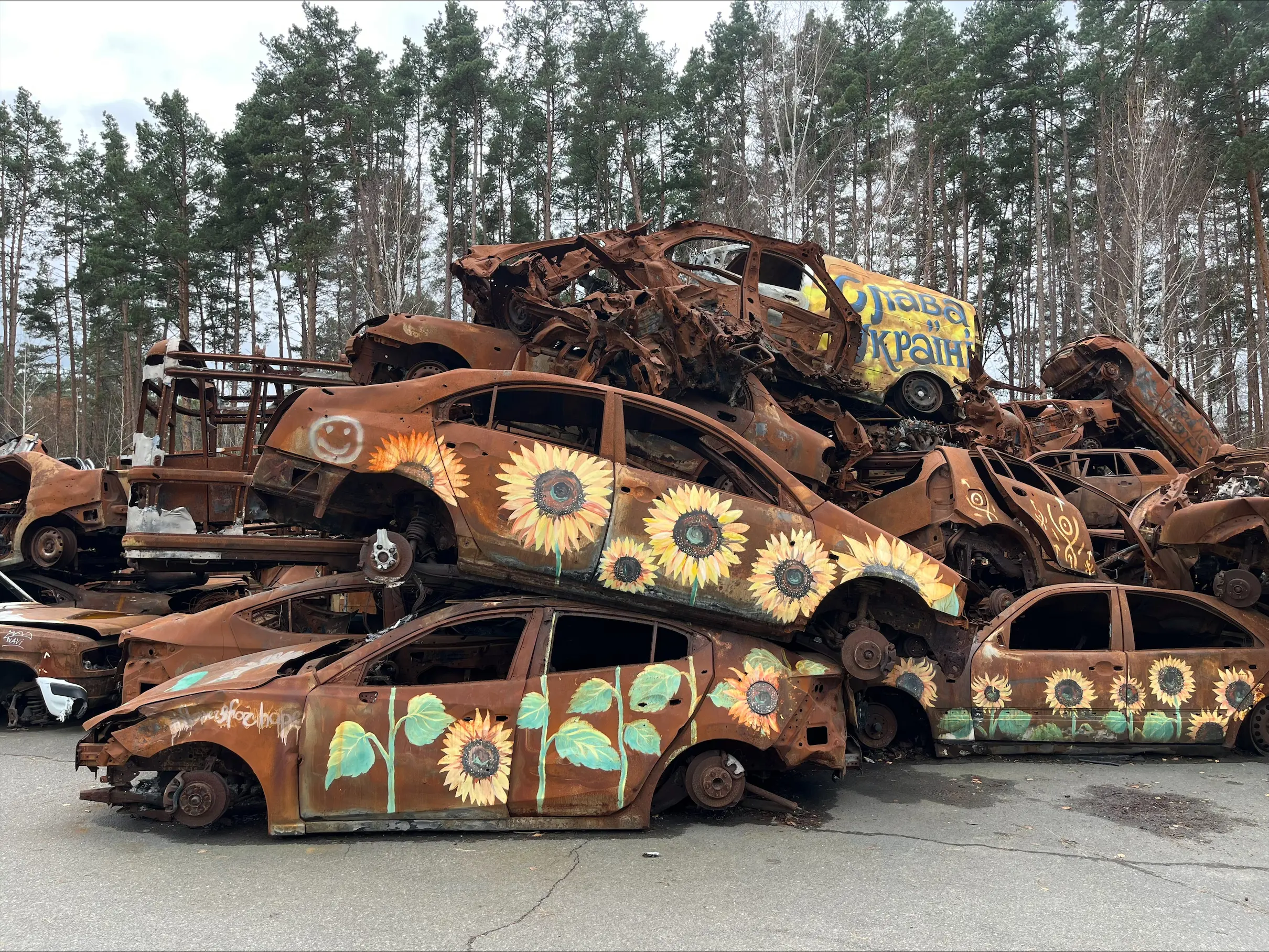
A monument of burnt cars in Irpin, Ukraine. The town was almost overrun by Russian forces in 2022. When people tried to run away, their cars were bombed by Russian military/Picture: Thabiso Goba/EWN
Reclaiming Bucha
In 2022, Russia temporarily seized the town of Bucha. It was a violent and bloody occupation, documented in galleries, museums, and monuments throughout the town.
The Russian occupation lasted only two weeks before the Ukrainian army recaptured it.
But the emotional scars remain.
A local pastor told EWN that everyone in the town lost someone they knew - a partner, sibling, parent, or friend.
The pastor said the town remains deeply religious despite the tragedy and in some cases because of it.
“For many people here, they don’t believe Russia will ever face justice in this world, not from the United Nations or international courts, but they believe there will be judgment in the next world when we all die,” he said.
Get the whole picture 💡
Take a look at the topic timeline for all related articles.
Trending News
- 2 hours ago
Fuel prices: OUTA says government could have avoided panic buying
- 2 hours ago
Justice Committee grants extension to judges facing impeachment
- 5 hours ago
NC public servants refusing lifestyle audits challenging govt legally
- 6 hours ago
Parts of N1 highway near Modimolle in Limpopo closed after fatal accident
- 7 hours ago
SANDF troops make way through gang-ridden areas in Cape Town
- 7 hours ago
IEC to recruit over 70k staffers to oversee voter registration weekend
- 7 hours ago
DJ Warras murder case postponed to May, investigative details outstanding
- 8 hours ago
Men accused of DJ Warras murder appear in court
- 9 hours ago
South Africans wake up to sharply high fuel prices
- 10 hours ago
City of Joburg fixes massive pothole after video of Zille taking a dip
- 11 hours ago
CoCT ready to support SAPS and SANDF in tackling violent crime
- 11 hours ago
SANTACO to implement any fare hikes with caution


