


From 10 Kotas a day to a Township empire: The rise of the Kota king

Simangele Legodi
9 March 2026 | 11:56Leaving his job as a hotel porter, Rhulani Shibambo returned home to grow a small fast-food venture that would later become Kota King.

Kota King owner, Rhulani Shibambo. Picture: Simphiwe Nkosi/EWN
What started as a small effort to help his family survive after his father lost his job has grown into a thriving township business.
Rhulani Shibambo, now known as the “Kota King,” began selling just 10 kotas a day from home, slowly reinvesting his earnings and building a brand that now employs 20 people and serves communities across southern Johannesburg.
Building a brand from adversity
"I was working as a porter at a hotel at the time, and I didn't really enjoy it. My father advised me to return home and expand the company."
Shibambo assembled a group of friends to assist him in coming up with a business name since he was determined to produce something significant. He chose "Kota King" because he was excited and ambitious.
"I reasoned that since I am a king, why not name the company Kota King?"
He became the brand's sole proprietor and formally registered it as a trademark in 2015. Kota King started out small but has already expanded into a flourishing township business.
Growing without funding
Shibambo had to deal with serious financial difficulties, much like many other township business owners. Funding was hard to come by, and he never received official financial aid. Rather, he used strategy and discipline.
He began with modest sales of 10 kotas per day and little equipment, then he progressively raised output to 50 and then 100 kotas per day. What's his secret? The effect of multipliers.
"I saved 10% to 20% of my income every day to reinvest in the business."
He also started dealing at events like the Kota Festival, where he was able to accelerate his growth due to larger quantities and slightly higher prices.
Currently, Kota King has eight event-related casual workers in addition to 12 regular employees. The company serves the southern Johannesburg region with four fixed locations and a trailer parked along Route 82.
Creating jobs in the township
"It was just me and one employee when I started," he added. "I realised I needed systems as we grew."
His plan for growth extended beyond food. He constructed his head office and initial flagship store after acquiring a property in Protea Glen Extension 13, the neighborhood where he was raised.
Additionally, he offers reasonably priced space rentals to other small business owners, such as tattoo artists, nail technicians, and hair stylists.
"It gives others the chance to run their own businesses, but it also creates another income stream for me," said Shibambo.
Expansion strategy
Rather than renting expensive mall space, Shibambo shifted his focus to property ownership and container outlets.
He cites a previous Pretoria store where he paid approximately R16,000 per month, excluding utilities and VAT.
In contrast, a newer container store operates at under R10,000 per month, inclusive of rent and utilities, providing much-needed breathing room to reinvest profits.
“Why pay R20,000 in rent when I can buy property and pay R7,000 towards a bond?”
His long-term strategy includes acquiring properties, rezoning them for business use and building stores that reduce overhead costs while strengthening his asset base.
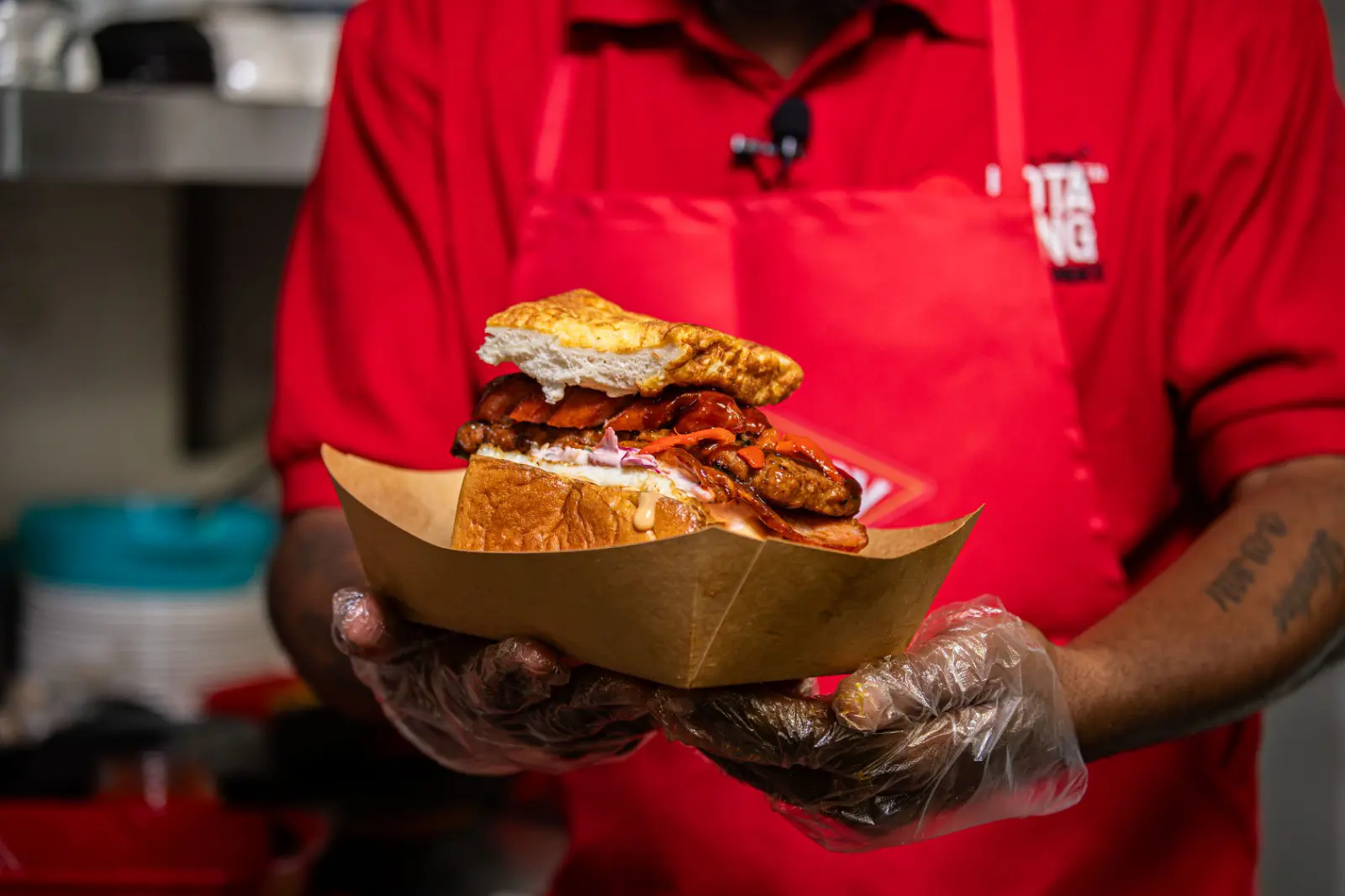
Rhulani Shibambo, the owner of Kota King started his kota or bunny chow business in Protea Garden, Soweto. Picture: Simphiwe Nkosi /EWN
The Kota Festival
Shibambo is one of the top 10 vendors taking part in the forthcoming Kota Festival Tour.
The Festival is a celebration of the popular street food. It is a community-driven platform that encourages economic inclusion, sekills development and township entrepreneurship.
The event, which is held in different provinces, includes Kota Business Workshops, which are intended to give current and prospective small business owners useful resources.
Taking kota to the world
Shibambo has been part of the festival since its early days in Johannesburg.
What began as a local event has evolved into a nationwide tour, reaching cities such as Cape Town, Durban, and provinces like Mpumalanga and Limpopo.
The tour has also expanded internationally to Eswatini and Lesotho.
This year, the festival is set to take South Africa’s iconic kota to the United States, with Shibambo among the selected vendors representing the brand abroad.
“Our objective is simple, take the kota to the world,” he said proudly.
The festival attracts at least 3,000 attendees per day, offering vendors the opportunity to generate a week’s turnover in a single day.
He is currently part of the Albany Entrepreneurial Development Programme, which supports festival vendors with business management training, compliance education, and growth strategies.
Get the whole picture 💡
Take a look at the topic timeline for all related articles.
Trending News
- 11 minutes ago
Ouaddou calls for humility as Pirates attempt to win sixth consecutive league Soweto Derby
- 1 hour ago
EXPLAINER: Madlanga task team swings into action: Arrests made as commission investigations deepen
- 2 hours ago
Stormers run riot against Glasgow to move to URC summit
- 2 hours ago
Trump evacuated as shooter opens fire at Washington gala
- 25/04, 06:53
Cachalia says Ramaphosa was correct to suspend Masemola
- 24/04, 13:05
SCOPA demands accountability as RAF liabilities threaten to destabilise national fiscus
- 24/04, 10:46
Police Ministry bays for blood of xenophobia perpetrators
- 24/04, 10:18
Mabuyane takes legal action against Malema over ‘defamatory’ statements
- 24/04, 10:15
Court set to rule on bail for Lerutla and Mkhwanazi next Tuesday
- 24/04, 09:40
SA Weather Service issues heavy downpours warning for long weekend
- 24/04, 09:21
Court rejects bid by Phala Phala accused to have charges dropped
- 24/04, 08:34
Victim in case against Mugabe's son, co-accused paid R250k to hush, court told