'The battle's not over': How Gloria Serobe's been fighting for women in business since WIPHOLD launch in 1994
Paula Luckhoff
26 February 2026 | 17:32The renowned business figure, co-founder of Women Investment Portfolio Holdings, joins Stephen Grootes for a wide-ranging interview.

Tshwane University of Technology's new Chancellor, Dr Gloria Serobe. Picture: tut.ac.za
Gloria Serobe enjoys a distinguished reputation in South Africa's business world and is known particularly for championing women in business through her leadership of Women Investment Portfolio Holdings (WIPHOLD).
She's sat on a long list of boards, from Nedbank to Denel and Adcorp, and received numerous awards and honorary degrees for her achievements.
She was also appointed as the Chancellor of the Tshwane University of Technology in 2024.
RELATED: TUT ready to formally welcome new Chancellor Gloria Serobe
Serobe tells Stephen Grootes how her family moved to Cape Town, but she was still schooled in the Eastern Cape where missionary schools provided a better education for black children during the apartheid years.
"My schooling ended up being Clarkebury High School in Ngcobo. and St. John's College in Mthatha. And I have to claim this - Clarkebury is where Mandela came from, and St. Johns produced Thabo Mbeki."
After graduating with a BCom degree from the University of the Transkei (UNITRA) in 1981, the young Serobe went straight into MBA studies at Rutgers University in the US on a scholarship.
While she encourages anyone to do an MBA, Serobe advises getting some work experience first.
"It's the one thing I regret a lot, that I did my MBA straight after my BCom. If I were to do it now I would enjoy an MBA - it is really, truly meant for people with some work experience and I missed that."
Going on to work for Exxon in the US, Serobe says the competitiveness in business there formed the basics of her own work ethic.
"The US is known for Hollywood and all that glamour... What people don't know is how hard the work ethic is. There's a big number of MBA graduates; you are not special there... I always appreciate the US because I have no need for the street lights, the beautiful things... Nobody thinks that the US is a place you can go to learn how to compete."
On her return to South Africa during the heady days of a new democracy, Serobe found herself among the few MBA holders in the country: "When you come here you are a bit of a rock star!"
However, amid the transition happening in 1994, it was a shock to discover that while the people who'd been excluded were now being included in the system, women were being left behind. Bringing women into the boardroom was the driving force behind the formation of WIPHOLD, she says.
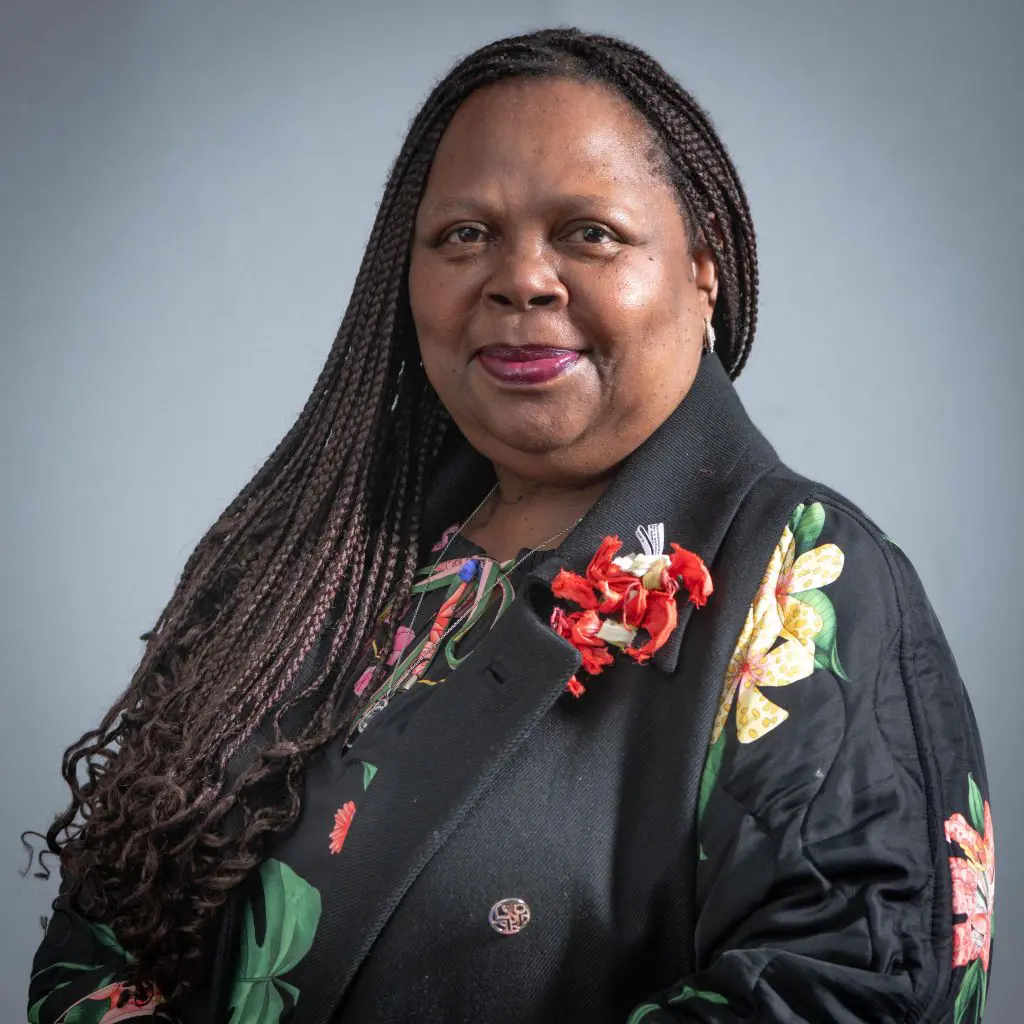
Gloria Serobe. Image credit: WIPHOLD
"Black men found it easy to just coexist with white men and both - white and black - forgot about women. We were shocked by this, and so when we formed WIPHOLD it was to correct that."
Serobe makes the point that this is not just a South African problem but a worldwide phenomenon. However, South Africa is actually ahead of many other countries in correcting this imbalance, she says.
"We thought, let's just force the presence of women in the mainstream of the economy. That's why we started WIPHOLD in a different way - for us to force ourselves into these boardrooms we needed to come in volumes. That's why you saw us doing a private-public offer, to say to women that this is a battle... It's a war zone; we have to go in numbers, and that's what we did."
During their time, she says, government did force the issue of recognising women in business, specifically during Thabo Mbeki's presidency. Serobe describes him as a champion for the presence of women in the mainstream of the economy, which WIPHOLD benefited from.
"So, in a sense it's possible that with more government pressure to recognise women in South Africa we became better than the rest of the world but, having said that, as soon as the noise is out of the way and we're left all by ourselves, we still get into all manner of undermining and that kind of thing... but the difference was that we did have a champion in the highest office of the land."
The battle is not over though, she emphasizes, and there's still a lot of work to be done.
Scroll up to the audio player to listen to this in-depth interview with Gloria Serobe
Get the whole picture 💡
Take a look at the topic timeline for all related articles.
Trending News
- 13 minutes ago
Malema sentencing: EFF supporters paint kuGompo streets red
- 2 hours ago
Long-running, deadly conflict between CATA & CODETA again spotlighted
- 2 hours ago
Mkhwanazi grilled for allegedly running kidnapping, extortion racket within EMPD
- 2 hours ago
More than 10k illegal firearm possession cases enrolled in 2 years – Kubayi
- 3 hours ago
Steenhuisen claims early success in vaccination against foot-and-mouth disease
- 3 hours ago
Malema says he’ll only accept a guilty verdict from ConCourt
- 3 hours ago
Ramaphosa braves backlash for appointing Roelf Meyer as ambassador to US
- 3 hours ago
Convicted child abuser Iain Wares returns to court for extradition hearing
- 3 hours ago
Iran participating in World Cup, FIFA president confirms
- 13 hours ago
ANC removes Jeff Radebe as KZN convenor, appoints Mike Mabuyakhulu
- 16 hours ago
Julius Malema set to learn his fate after 8 years in the dock
- 18 hours ago
IN PICS | EFF supporters gather in KuGompo City to support Malema