


MALAIKA MAHLATSI | The dangerous lesson that Gayton McKenzie internalised about optics and (in)justice
Malaika Mahlatsi
23 March 2026 | 11:00The situation at our borders is, without question, untenable. Land borders, in particular, are highly porous due to years of underfunding, understaffing, broken infrastructure, and corruption, writes Malaika Mahlatsi.
- Joshlin Smith
- Gayton McKenzie
- South African National Defence Force (SANDF)
- Border Management Authority (BMA)
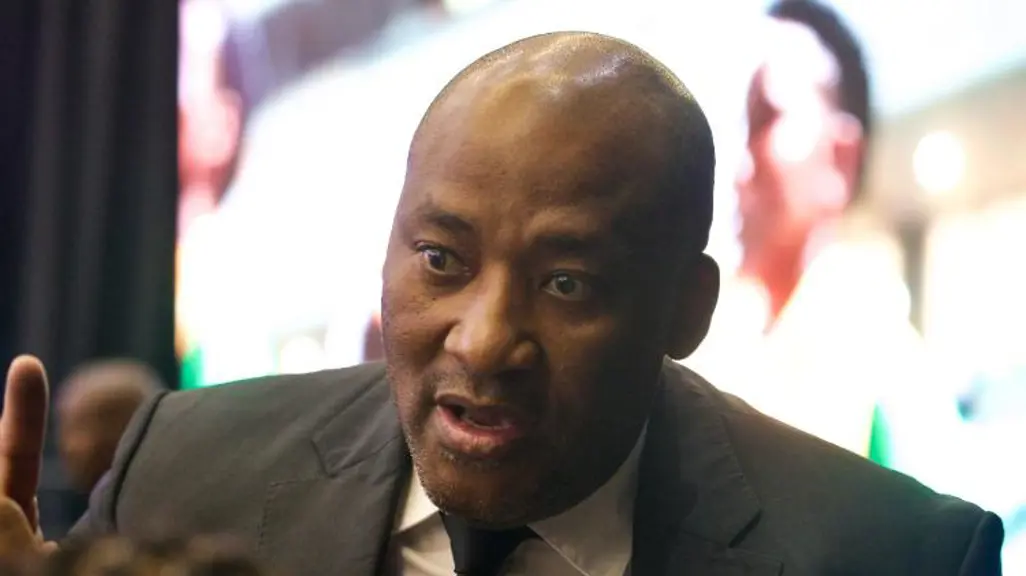
FILE: PA leader and Sport, Arts and Culture Minister Gayton McKenzie. Picture: Katlego Jiyane/Eyewitness News
A few years ago, Patriotic Alliance (PA) president, Gayton McKenzie, who serves as the Minister of Sports, Arts and Culture in the Government of National Unity (GNU), learned the wrong lesson about power that has since come to define how he engages with politics and the people of South Africa.
Just before the 2024 general election, McKenzie and members of the PA deployed themselves to the border along the Limpopo river with the aim of forcing migrants entering the country illegally to return to their country of origin, Zimbabwe.
For days, McKenzie and PA members patrolled along the river banks, physically restricting undocumented migrants from entering the country and taking videos of these encounters.
The PA’s deputy president, Kenny Kunene, repeatedly stated that the South African National Defense Force (SANDF) and the Border Management Authority (BMA) were failing to stem the flow of undocumented migrants into South Africa.
The BMA is the mandated, armed, and integrated frontline authority responsible for securing the country's borders, managing ports of entry, and enforcing immigration laws.
It coordinates cross-border movements, prevents illicit smuggling, and manages biosecurity, agricultural, and health, phyto-sanitary regulations across all land, sea, and air borders. The SANDF complements the BMA’s work.
The situation at our borders is, without question, untenable. Land borders, in particular, are highly porous due to years of underfunding, understaffing, broken infrastructure, and corruption.
This problem has facilitated illegal mining, livestock theft, human trafficking and illegal border crossings – all of which impact the country’s national security. And while this is an issue that demands attention, its resolution cannot be the legitimisation of lawlessness, especially on the part of political leaders.
There is a process that needs to be followed because while the removal of undocumented immigrants is lawful, it is an administrative process that must be carried out by authorised officials following the strict procedures and legal safeguards outlined in the national legislation and the Constitution.
McKenzie, Kunene and members of the PA are not authorised officials – they are political actors who broke the law. But they were celebrated by millions of South Africans and treated like heroes for their actions. This is understandable given the extent of polarisation in our country.
But when people who engage in unlawful action are rewarded with a ministerial position and the position of a member of the mayoral committee (MMC) in the wealthiest metropolitan municipality in the country, the message it sends across is that political mileage is more important than the law, and by extension, more significant than justice.
This lesson that McKenzie learned has shaped how he engages with the people of South Africa, and specifically, how he has handled the matter of Joshlin Smith, the little girl who disappeared from the Middelpos informal settlement in Saldanha Bay in February 2024.
Her mother, Kelly Smith, and her co-accused, Boeta Appollis and Steveno van Rhyn, were arrested following the disappearance, and were subsequently sentenced to life imprisonment for human trafficking and 10 years for kidnapping.
Joshlin has still not been found. McKenzie became deeply involved in the case and recently launched the Joshlin Smith Foundation, appointing his own friends and associates to the board. Not a single member of Middelpos or Saldanha, broadly, form part of the board.
This is despite the fact that several community members have been consistently involved in the perilous work of searching for Joshlin since her disappearance, using their own financial and non-financial resources in the process.
Cheslyn Steenberg, board member of the foundation who also happens to be a member of the PA, trivialised this by arguing that the board is in its infancy, implying that issues of representation would be dealt with over time. And while it may be true that newly formed institutions require time to stabilise, the fact that a foundation of this nature would exclude members of the missing child’s community at inception speaks volumes about whose voice is McKenzie deems important and whose, unimportant.
You may be wondering how the Joshlin Smith Foundation matter connects to that of the patrolling at the border. When McKenzie led his party members to the border without any regard for the prescriptions of the law, and was rewarded for it, the lesson he took from that was that due process is unimportant.
He was taught that in South Africa, you could disregard the law and still be appointed as a cabinet minister, provided that you have the necessary political mileage.
He also learned that justice is secondary to his own political objectives. This is the reason that today, he does not deem it necessary to establish a foundation that follows the very important process of engaging with the Saldanha community to whom Joshlin belongs, and why the issue of representational justice is subordinate to his own desire to be seen as taking action.
Just as he so casually spat on the principle of administrative justice with the border patrols, he is today spitting on the principle of representational justice with the Joshlin Smith Foundation.
In his political life, McKenzie does not deem justice in any form as a foundation on which the responsibility of leadership must be built. He is casual about it because he has internalised the idea that optics alone matter.
In 2024, optics mattered because they ingratiated him to a South African public that is antagonistic to immigration, and specifically, to the inflow of undocumented immigrants who have consistently been blamed for the structural challenges that the country is confronted with.
Today, optics matter too in the case of Joshlin Smith because the scourge of gender-based violence (GBV) and the abuse of children is so deeply personal to all of us that we would give anything to see it end.
McKenzie knows that being seen to be doing the work of searching for Joshlin earns him political mileage in ways that it does not for the individuals in Saldanha who have been doing the work long before he entered the scene.
South Africans will applaud McKenzie and say he is at least doing something, disregarding that this “something” comes at the expense of sustainable and meaningful justice. They will do this because they have done it before and McKenzie knows this. This knowledge, in the hands of someone who is committed to playing to the gallery at all cost, is dangerous.
Malaika is a bestselling author and researcher. She is a PhD in Geography candidate at the University of Bayreuth in Germany.
Get the whole picture 💡
Take a look at the topic timeline for all related articles.
Trending News
- 2 hours ago
SAFTU’s Vavi on expected fuel price hikes: Workers 'can’t breathe'
- 2 hours ago
Nkosi tells Madlanga Commission about 'Cat' Matlala's link to Paul Mashatile
- 4 hours ago
Health Ombud slams George Mukhari Hospital over patient's death
- 4 hours ago
Nkosi’s home once raided in search of Matlala’s credit card, Madlanga Commission told
- 5 hours ago
Labour Court dismisses Julius Mkhwanazi's bid to interdict disciplinary hearing
- 7 hours ago
All 5 bodies trapped underground at Ekapa Mine recovered
- 8 hours ago
DA wants ETDP SETA held accountable for alleged mismanagement of grants
- 8 hours ago
WC to reinforce Easter weekend roadblocks amid foot-and-mouth disease outbreak
- 9 hours ago
Tshwane municipality following up on revelations at the Madlanga Commission
- 9 hours ago
Court to hear landmark legal challenge against TotalEnergies oil exploration
- 9 hours ago
Court to decide alleged paedophile teacher Ian Wares’ fate
- 9 hours ago
Efforts to locate remaining miners trapped underground continue at Ekapa Mine


More in Opinion

20 March 2026 15:39
CARRYN-ANN NEL | From glam to mugshots: The rise and fall of Peet and Mel Viljoen

20 March 2026 09:44
Nontando Nolutshungu | South Africans must reclaim the power of the vote

19 March 2026 12:00
CHARLES MATSEKE | Re-examining Mkhwanazi’s July 6 statement in the Republic of Commissions