


SARB holds interest rates as Iran war fuels oil price hikes and inflationary risks
Paula Luckhoff
26 March 2026 | 17:16Reserve Bank Governor Lesetja Kganyago announced the Monetary Policy Committee's latest repo rate decision on Thursday.
- The Money Show
- Stephen Grootes
- South African Reserve Bank (SARB)
- Interest rates
- South African Reserve Bank Governor Lesetja Kganyago
- Interest rate
- Inflation
- Middle East

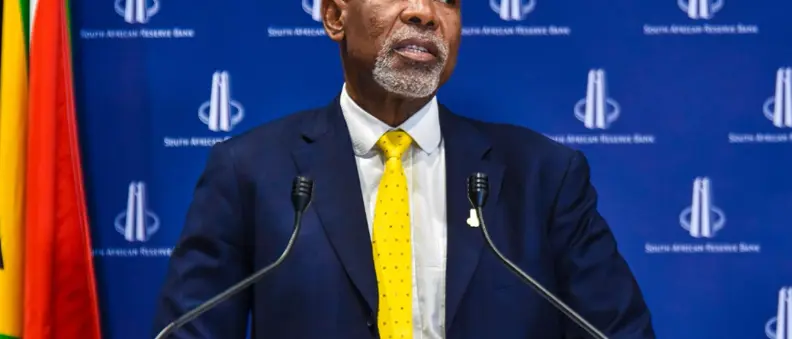
Reserve Bank Governor Lesetja Kganyago delivers the March 2026 MPC statement - Screengrab from SARB video.
It was no surprise when the SA Reserve Bank (SARB) announced it has opted to hold the repo rate steady, in the face of the Iran war and the oil price increase and inflationary fears it has led to.
Delivering the Monetary Policy Committee (MPC) statement, Governor Lesetja Kganyago said the benchmark repo rate would remain at 6.75%. The decision was unanimous.
This means the prime lending rate still sits at 10.25%.
Up until mid-February, before the US and Israel launched attacks on Iran, analysts had expected rate cuts to resume in March.
Kganyago highlighted that conditions remain uncertain just a few weeks into the price shock the conflict is causing.
"At this stage, it is obvious that global inflation will be higher in the near term, while growth will probably suffer from supply-chain disruptions and rising costs. But the longer-term outlook is less clear."
For the time being though, the Reserve Bank's growth projections for South Africa are largely unchanged.
"The latest data show the economy grew further in the fourth quarter of 2025, with output rising by 1.1% for the year as a whole. This is better than recent years but still well below longer-run averages. We have been encouraged by green shoots such as rising confidence and stronger investment, but the ongoing war could interrupt the growth recovery."
While inflation was at 3% for February, in line with the new target, higher energy prices will raise inflation in the near term, Kganyago said.
RELATED: SARB pushes ahead with proposed scrapping of prime rate, but is it just a name change exercise?
"We expect headline inflation will soon accelerate to around 4%, with fuel inflation over 18% for the second quarter. Our baseline forecast then has a gradual unwinding of the shock, taking inflation back to 3% late next year."
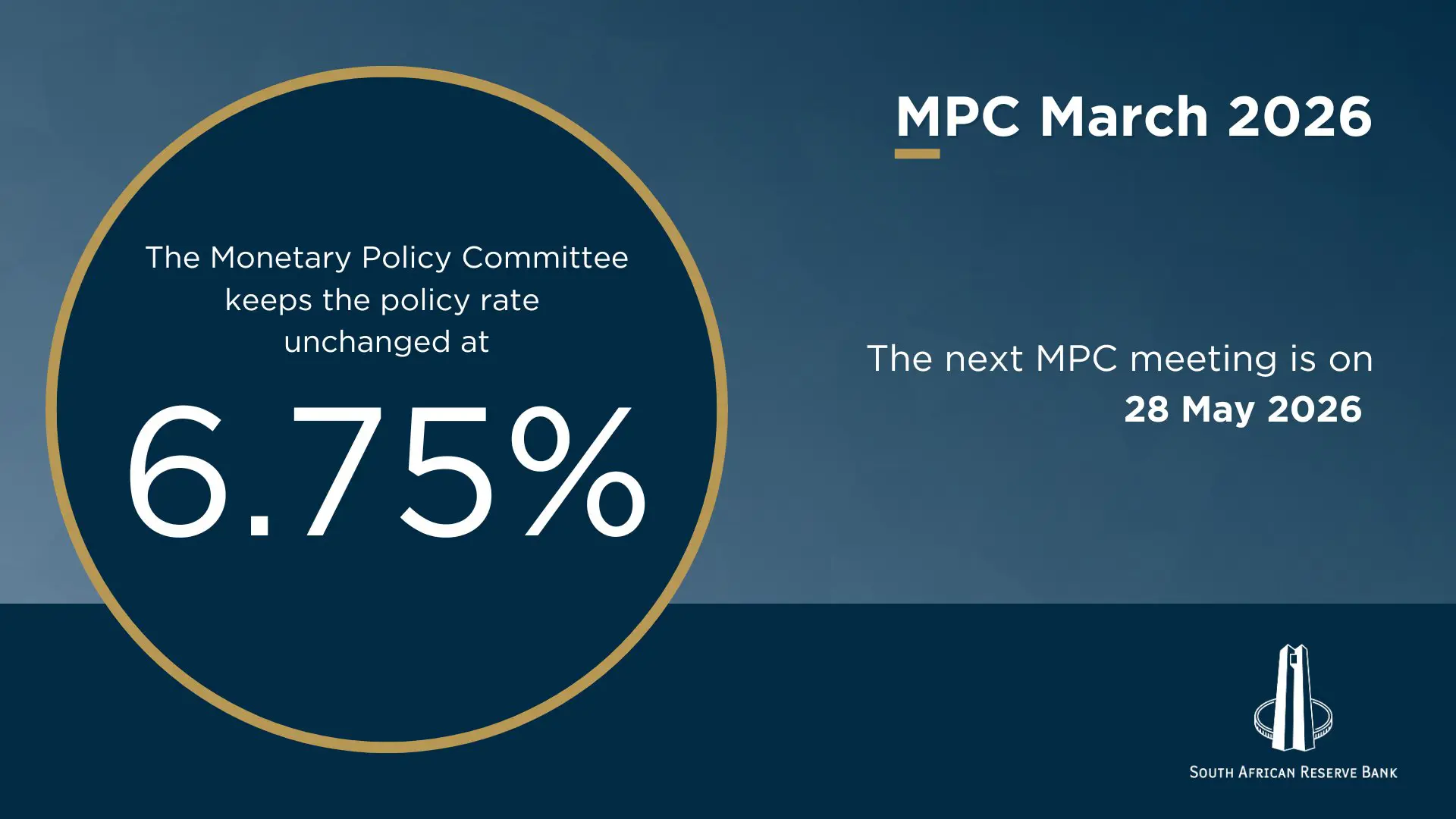
MPC statement on 26 March 2026. SA Reserve Bank/X
Stephen Grootes gets comment from Kevin Lings, chief economist at Stanlib Asset Management.
Lings concurs that the SARB was not left with much choice in the face of geopolitical developments.
He points out that the vast majority of around 15 central banks that have met since the Iran war started, have kept rates on hold.
"There have been a couple that have hiked... but generally the thought at the moment is a 'wait and see'. And what you're looking for is how long does this crisis last, how long does the oil price stay at these levels."
And the longer oil prices stay at current high levels, the more damage this will do both to inflation and to growth.
"The primary focus is unfortunately going to be on inflation. So the tendency from most central banks wil be to wait and see, but keep indicating that the risk is to higher interest rates if the impact of the oil price broadens into many different price categories."
Scroll up to the audio player to listen to Lings' analysis
Trending News
- 3 hours ago
Mabuyane confirms ANC EC will appeal interdict as conference registration begins
- 4 hours ago
G7 invitation retracted: South Africa sidelined following US pressure
- 4 hours ago
Court reinstates Ingonyama Trust Board, bars ministerial interference
- 5 hours ago
Reserve Bank holds repo rate at 6.75% amid growing inflation risks
- 7 hours ago
Strength in the surf: Noluthando Makalima challenges misconceptions about disability
- 7 hours ago
Detectives return to Saldanha Bay as new leads surface in Joshlin Smith case
- 9 hours ago
DA lays criminal complaint against ETDP SETA officials
- 9 hours ago
Potential battery hazard prompts Ford to recall Transit and Tourneo models
- 9 hours ago
Tshwane council meets to consider CFO Mnisi’s possible suspension
- 9 hours ago
Maluleke: Govt depts with largest budgets continue receiving qualified audit outcomes
- 11 hours ago
EFF takes Phala Phala case judgment delay to Chief Justice Maya
- 11 hours ago
Tshwane administration to crack down on graft allegations raised before Madlanga Commission




More in The Money Show

26 March 2026 11:54
Are electric cars worth it in South Africa as petrol prices climb?

25 March 2026 20:44
Tough times ahead with looming fuel price hikes and expected rate hold, even as SA salaries rise consistently

25 March 2026 19:54
EV charging station developer objects to SANRAL attempt to 'cash in' on roadside services