Meat price decrease helps cool food inflation, but looming fuel hikes could change consumer outlook
Paula Luckhoff
18 March 2026 | 17:38The latest numbers show consumer price inflation softened to 3% in February. The Money Show interviews FNB's Koketso Mano.

Meat counter in supermarket. Wikimedia Commons/Missvain
Annual consumer price inflation eased further in February 2026 to 3% - the SARB's new target, fron 3,5% in January.
The monthly change in the consumer price index (CPI) was 0,4%, according to the latest figures from Statistics SA.
While this drop is good news, it's overshadowed by the expected oil and fuel price hikes expected to unleash inflation again due to the conflict in the Middle East.
RELATED: Oil prices climb as fresh strikes target infrastructure
Stats SA attributes the CPI dip mainly to a delay in implementation of some new medical aid rates, the decline in fuel prices in February and the slower-than-expected pace of medical services increases.
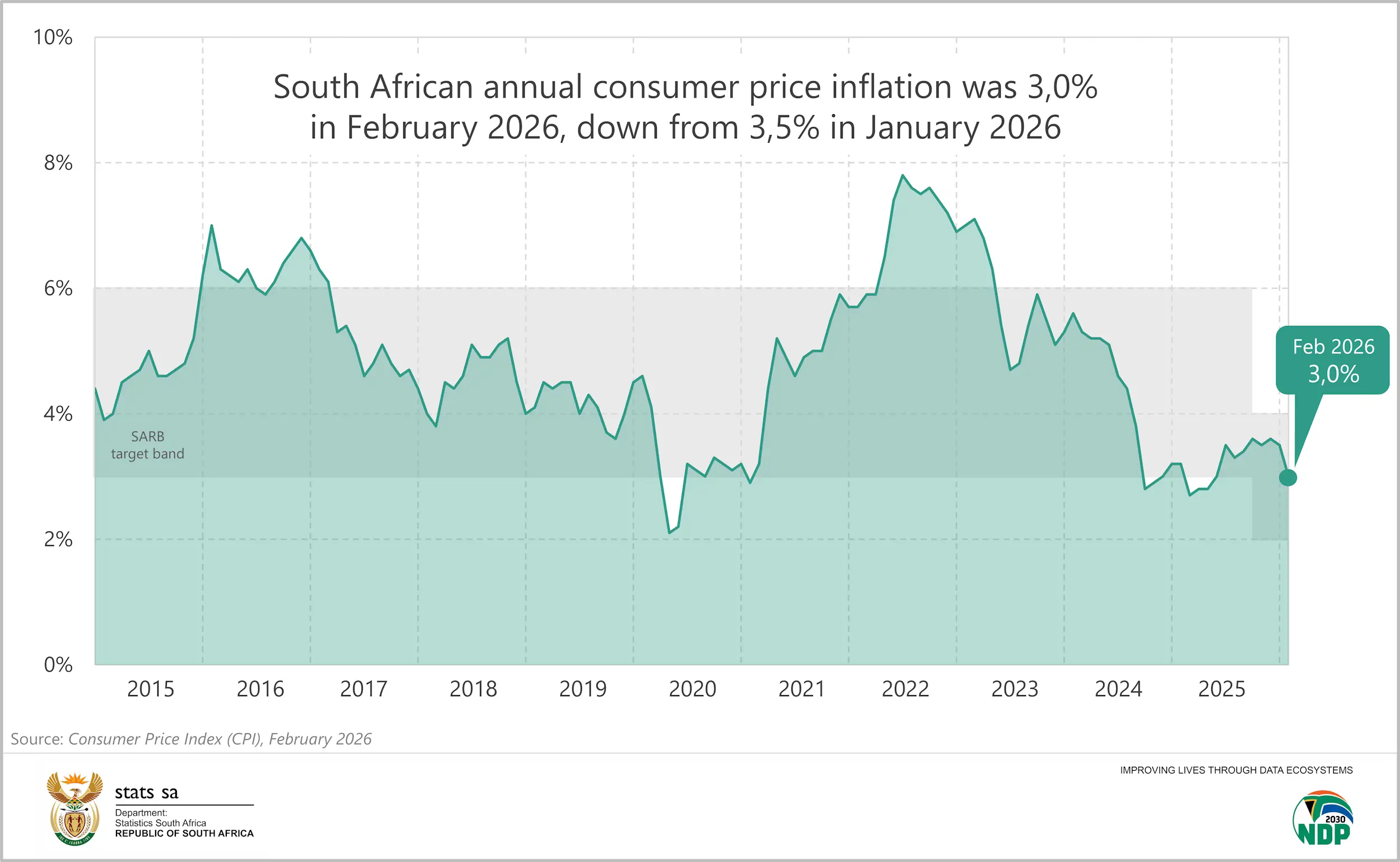
Consumer price inflation, February 2026. Statistics SA/X
Also contributing to the lower CPI print in February was a decline in food inflation - the first in four months.
The annual rate for food and non-alcoholic beverages (NAB) declined to 3,7% from 4,4% in January.
Meat lovers will be happy to see inflation for this category eased to 12,2% from 13,5% in January.
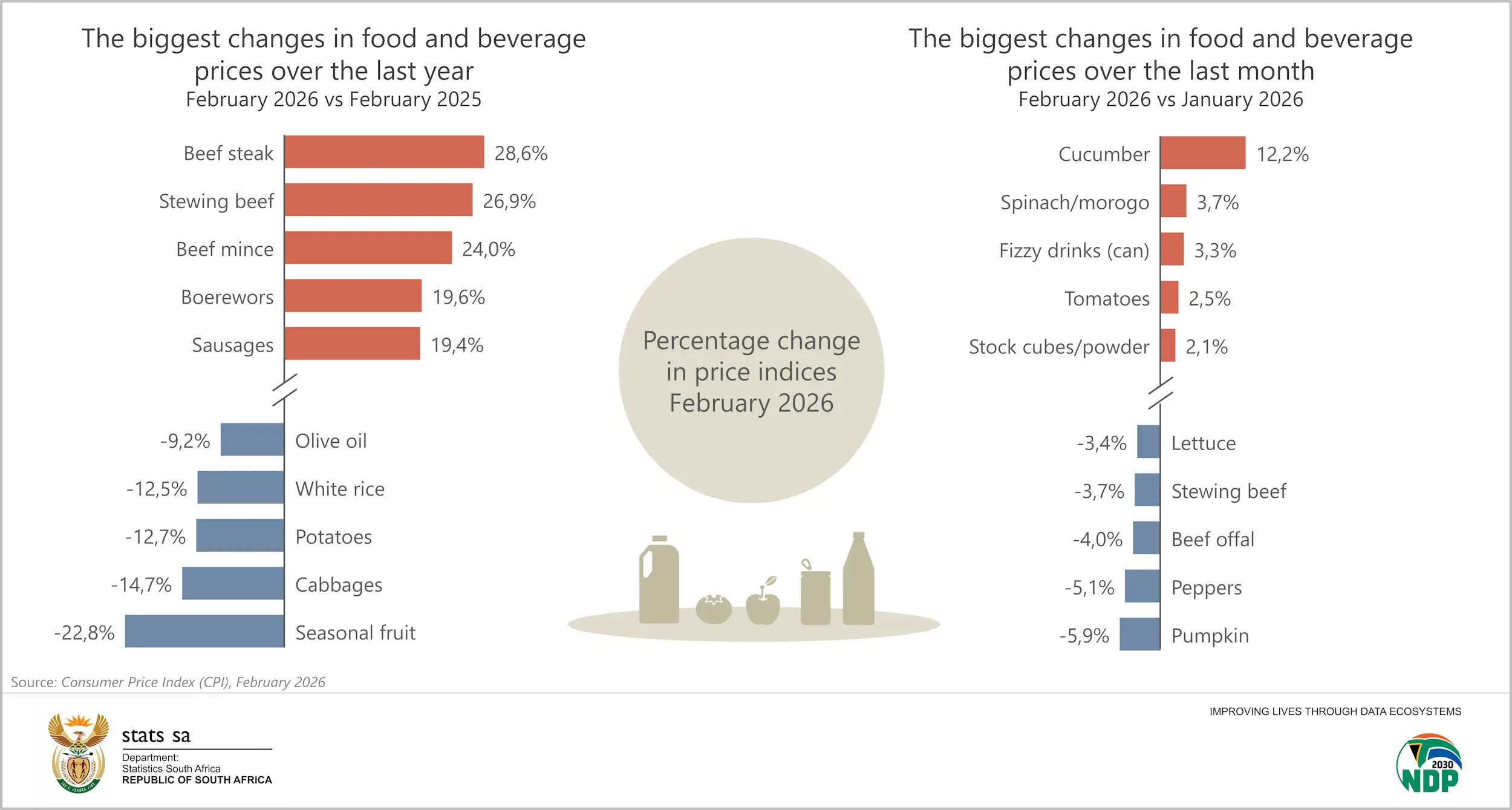
Food inflation in February 2026 - Statistics SA/X
While many factors conspired to finally reach the Reserve Bank target of 3%, says FNB chief economist Koketso Mano, food inflation did surprise them to the downside, especially given ongoing biosecurity issues.
She also cautions against expecting meat prices to stay down.
"On average that meat price component was down 1.1% so it's good relief given all the months of heightened pressure. We're hoping it's not just a one-month dip but that it could be speaking to producers either not passing on the pressure or there's just not enough demand to see it in the consumer price basket but there's no guarantee we won't see prices relapsing."
RELATED: SA ‘highly exposed’ with just two weeks of fuel reserves
Mano also expresses the general disappointment at looming fuel price hikes in April, with economists having come into this year a bit more upbeat around the economy.
"And then barely a quarter into the year and we have to think about the risks we've been speaking to around geopolitical structuring that will result in economic uncertainty, which we've seen happening exactly with the war in the Middle East."
"The April fuel price will be the first touch point for South Africans and then you might see these price pressures spread out through the economoy as the costs are passed on."
Scroll up to the audio player to hear more of Mano's take on the latest inflation figures
Get the whole picture 💡
Take a look at the topic timeline for all related articles.
Trending News
- 37 minutes ago
President rebukes Minister Mchunu in written submission to police corruption inquiry
- 3 hours ago
Matlala's wife files harassment case against Tebogo Thobejane amid attempted murder trial
- 4 hours ago
Mkhwanazi defends secret meeting with alleged crime kingpin 'Cat' Matlala
- 7 hours ago
MK Party reinstates John Hlophe to leadership positions
- 7 hours ago
Mkhwanazi: Mchunu was 'captured' to disband PKTT
- 8 hours ago
Bulgarian fugitive Stamenov’s SA residency obtained fraudulently, court hears
- 8 hours ago
Fannie Nkosi questioned about contact with taxi boss linked to Armand Swart murder
- 9 hours ago
Case against murder-accused Vusimuzi ‘Cat’ Matlala temporarily adjourned
- 9 hours ago
Law firm points to irregularities in panel established to appoint NPA head
- 9 hours ago
Parly police inquiry: Mkhwanazi cites prejudice in MPs' handling of evidence
- 10 hours ago
Teen fights for life in ICU after East Rand scholar transport crash
- 11 hours ago
LIVE | Parliamentary ad hoc committee investigating allegations of police corruption inquiry