


Phala Phala scandal deepens as IPID exposes parallel police investigation

Kabous Le Roux
13 April 2026 | 7:06An IPID report reveals an unlawful, off-the-books probe into the Phala Phala theft, with no case opened and key questions over what President Ramaphosa knew.
- 702
- 702 Breakfast with Bongani Bingwa
- Phala Phala
- Independent Police Investigative Directorate (IPID)
- Bongani Bingwa
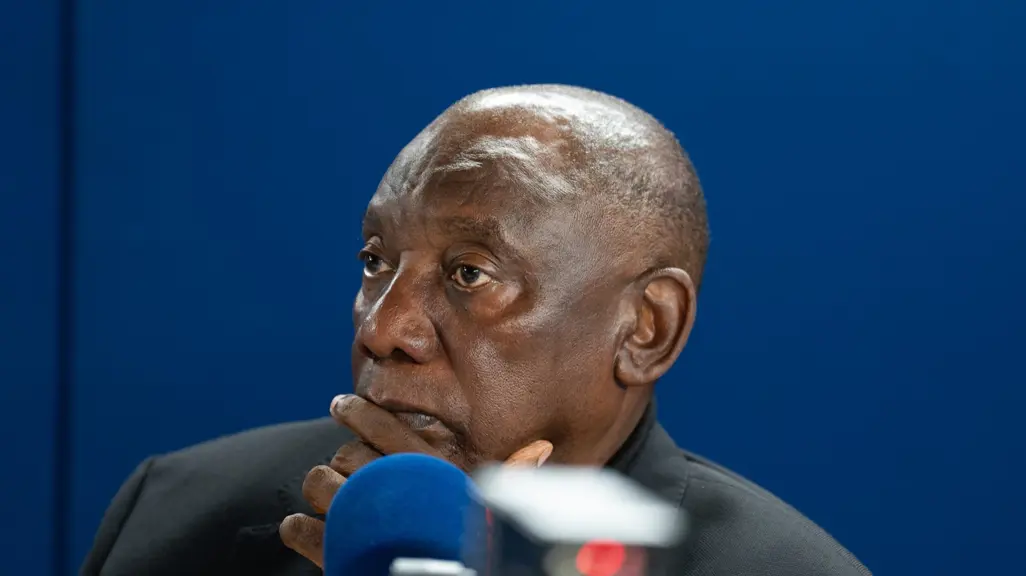
FILE: President Cyril Ramaphosa in studio with 702's Clement Manyathela on 20 May 2024. Picture: Xanderleigh Dookey-Makhaza/Eyewitness News
A newly released report by the Independent Police Investigative Directorate (IPID) has found that members of the Presidential Protection Service ran an ‘unlawful’ parallel investigation into the 2020 burglary at President Cyril Ramaphosa’s Phala Phala farm.
The report, completed in 2023 but only recently made public, details how hundreds of thousands of US dollars were stolen during the break-in, yet no formal criminal case was opened at the time.
Instead, senior officers allegedly used state resources to track suspects across provinces and beyond South Africa’s borders, outside official police channels.
Parallel probe ‘off the books’
IPID’s national head of investigations, Thuso Keefelakae, said the watchdog focused on police conduct rather than the underlying crime.
“Our investigation… found that there were some transgressions,” Keefelakae said.
According to the report, officers linked to the Presidential Protection Service:
— Failed to open a formal case or inquiry
— Conducted investigations without case numbers or official authorisation
— Used state resources despite operating outside legal processes
This amounted to what IPID describes as an ‘off-the-books’ investigation.
Why was the report classified?
The report was initially kept secret due to ongoing investigations by the Hawks, formally known as the Directorate for Priority Crime Investigation.
Keefelakae said IPID also wanted to protect whistleblowers and witnesses.
“The harm could be that you share information prematurely… [and] put informants’ lives in jeopardy,” he said.
The report was declassified only in February 2026, after authorities determined it was safe to release.
Key question: What did Ramaphosa know?
Despite detailing alleged misconduct by senior officers, the report does not establish what the president knew about the parallel investigation.
Keefelakae said that the question fell outside IPID’s mandate.
“Our investigation was not about whether he had informed the president or not,” he said.
Instead, IPID focused on whether officers followed legal procedures, concluding they did not.
No case was opened despite the alleged crime
One of the report’s most striking findings is that police failed to open a case after being informed of the theft.
“That’s the finding by IPID,” Keefelakae confirmed.
Under standard procedure, officers are required to register a case when aware of a potential crime, a step that was not taken in this instance.
Political and legal pressure grows
The report’s release follows years of legal battles, with media houses, political parties and civil society groups using access-to-information laws to obtain it.
Its findings are likely to intensify scrutiny on the presidency and law enforcement, particularly around:
— Alleged misuse of state resources
— Failure to follow basic policing procedures
— Possible attempts to keep the matter out of official channels
The controversy continues as the Constitutional Court of South Africa is expected to rule on related matters.
Related: Phala Phala fallout intensifies
Recent reporting shows mounting political pressure following the release of the IPID report.
— Ramaphosa deflects as declassified IPID report details Phala Phala cover-up allegations
— ATM awaits response after request to impeach Ramaphosa
— IPID recommends disciplinary action against one of Ramaphosa’s senior protectors
For more detailed information, listen to Keefelakae on 702 using the audio player below:
Get the whole picture 💡
Take a look at the topic timeline for all related articles.
Trending News
- 2 hours ago
Judicial Service Commission conducts interviews for three SCA positions
- 3 hours ago
Brink prepared to juggle 2 DA roles after election as deputy federal chair
- 3 hours ago
Hill-Lewis shares 'mission to grow DA into largest party in SA'
- 3 hours ago
IN PICS: Attendees share excitement at first instalment of Joburg’s Main Street Sundays
- 4 hours ago
Fannie Nkosi to return to court for formal bail bid
- 4 hours ago
SAPS PKTT takes over investigation into murder of Emfuleni Municipality accountant
- 4 hours ago
ATM awaits response from Didiza after request to impeach Ramaphosa
- 4 hours ago
DA doesn’t plan to be secondary GNU partner forever, says Hill-Lewis
- 5 hours ago
Man accused of killing Madlanga Commission witness returns to court
- 5 hours ago
Msimanga to continue as DA Gauteng leader after clinching top position
- 5 hours ago
WC govt continues fight against foot-and-mouth disease with 50k vaccines
- 5 hours ago
Nafiz Modack set to return to the dock in WC High Court


